Men's Watches
How the men's watch reached the modern wrist
Men's watches evolved from gentlemen's pocket watches into the wristwatch through a series of practical and technical shifts. In the 17th and 18th centuries portable spring-driven clocks became pocket watches, carried by men while wristwatches were considered feminine. Nineteenth century industrialization brought mass production and wider ownership, and houses such as Patek Philippe and Vacheron Constantin set the standards for craftsmanship and precision. The First World War made the wristwatch masculine and necessary, since soldiers needed the time without reaching into a pocket, and makers such as Rolex and Omega built reliable wristwatches that men kept wearing in civilian life. The mid 20th century added the self-winding movement and enduring icons including the Rolex Submariner and the Omega Speedmaster. The late 20th century split the market between the digital revolution, led by affordable Casio models, and a luxury resurgence from houses such as Audemars Piguet and Tag Heuer, and the 21st century has fused technology and tradition in smartwatches and in mechanical watches that borrow their connectivity. Rolex, founded in 1905, and Omega, established in 1848 and long the official timekeeper of the Olympic Games, remain reference points. This guide traces that evolution and the main men's watch types it produced.
Men's Watches: A Timeless Evolution in Horology
Men's watches have evolved from simple timekeeping devices to sophisticated accessories that blend craftsmanship, engineering, and style. This journey through time unveils the evolution of design, manufacturing, and trends that have shaped men's watches over the decades.
Historical Evolution
17th-18th Century: Pocket Watches and Early Wristwatches
- The earliest timepieces were pocket watches, evolving from portable spring-driven clocks. In the 17th century, pocket watches gained popularity among gentlemen. Wristwatches for men were rare and primarily seen as feminine until the late 19th century.
19th Century: Mass Production and Widespread Use
- Industrialization in the 19th century led to mass production of watches, making them more affordable and accessible. Key players like Patek Philippe and Vacheron Constantin emerged, setting high standards for craftsmanship and precision.
Early 20th Century: Wristwatches for Men
- Wristwatches gained traction during World War I when soldiers found them more practical than pocket watches. Brands like Rolex and Omega produced reliable and accurate wristwatches, popularizing them among men.
Mid 20th Century: Innovation and Style
- Post-World War II, men's watches saw innovations like the self-winding movement and the introduction of iconic designs such as the Rolex Submariner and Omega Speedmaster. These watches embodied both style and functionality.
Late 20th Century: Digital Revolution and Luxury Resurgence
- The late 20th century witnessed the digital watch revolution with brands like Casio introducing affordable digital timepieces. Concurrently, luxury brands like Audemars Piguet and Tag Heuer pushed the boundaries of design and engineering, appealing to a diverse market.
21st Century: Fusion of Technology and Tradition
- The 21st century brought a surge of smartwatches, integrating technology with traditional timekeeping. Luxury brands adapted by combining classic designs with modern features, catering to an evolving consumer base.
Popular International Men's Watch Brands
Rolex (Switzerland):
Founded in 1905, Rolex is synonymous with luxury and precision. Their watches like the Submariner and Daytona are icons of design and reliability.
Omega (Switzerland):
Established in 1848, Omega is celebrated for its role as the official timekeeper of the Olympics and for being the first watch on the moon during the Apollo missions. The Speedmaster and Seamaster are renowned collections.
Patek Philippe (Switzerland):
Founded in 1839, Patek Philippe is a pinnacle of Swiss watchmaking. Their timepieces are known for their elegance, complications, and heritage. The Calatrava and Nautilus are esteemed collections.
Tag Heuer (Switzerland):
Established in 1860, Tag Heuer is acclaimed for its innovative designs and association with motorsports. The Carrera and Monaco collections embody their sporty yet sophisticated style.
Audemars Piguet (Switzerland):
Founded in 1875, Audemars Piguet is renowned for its avant-garde designs and high-quality craftsmanship. The Royal Oak and Royal Oak Offshore are highly coveted collections.
Seiko (Japan):
Seiko, established in 1881, is a pioneer in watchmaking. They offer a wide range of watches, from affordable to high-end, and are known for their innovation and durability.
Breitling (Switzerland):
Founded in 1884, Breitling is synonymous with aviation-inspired watches. Their timepieces are known for their precision, durability, and professional features.
Panerai (Italy):
Founded in 1860, Panerai is famous for its distinctive design and association with the Italian Navy. The Luminor and Radiomir collections are iconic.
IWC Schaffhausen (Switzerland):
Established in 1868, IWC Schaffhausen is recognized for its engineering and aviation-inspired timepieces. The Pilot's and Portugieser collections are highly regarded.
Citizen (Japan):
Citizen, founded in 1918, is a global leader in watch technology and innovation. They offer a wide range of watches, from eco-friendly solar-powered models to high-precision pieces.
Retail Destinations for Luxury Men's Watches and Watch Categories
When it comes to purchasing luxury men's watches, several retailers are renowned for their exclusive collections and exceptional customer service. Additionally, understanding the different categories of men's watches helps enthusiasts make informed choices based on style, features, and occasion.
Popular Retailers for Luxury Men's Watches
Watches of Switzerland:
- Known for its curated collection of luxury watches, Watches of Switzerland offers timepieces from renowned brands like Rolex, Patek Philippe, Omega, and more. They provide a personalized shopping experience and expertise in horology.
Tourneau:
- Tourneau, a premier luxury watch retailer, offers an extensive range of men's watches from top brands. They provide certified pre-owned watches and have an excellent selection of both classic and modern timepieces.
Wempe:
- Wempe, a family-owned company, is celebrated for its exceptional selection of luxury watches, including brands like Rolex, Audemars Piguet, and Jaeger-LeCoultre. They also offer expert watch services and advice.
Chrono24:
- Chrono24 is an online marketplace where you can find a wide variety of luxury men's watches from both authorized dealers and private sellers. It provides a platform to compare prices and features before making a purchase.
Tiffany & Co.:
- Tiffany & Co. is renowned for its timeless and elegant men's watches. They offer a range of styles, from dress watches to sporty designs, incorporating high-quality craftsmanship and materials.
Harrods:
- Harrods, a luxury department store, houses a prestigious watch department featuring an array of luxury men's watches from iconic brands. Their collection caters to various tastes and preferences.
WatchBox:
- WatchBox specializes in pre-owned luxury watches, providing a platform for buying, selling, and trading watches. They offer authenticated, high-quality timepieces with a focus on customer satisfaction.
Categories of Men's Watches
Dress Watches:
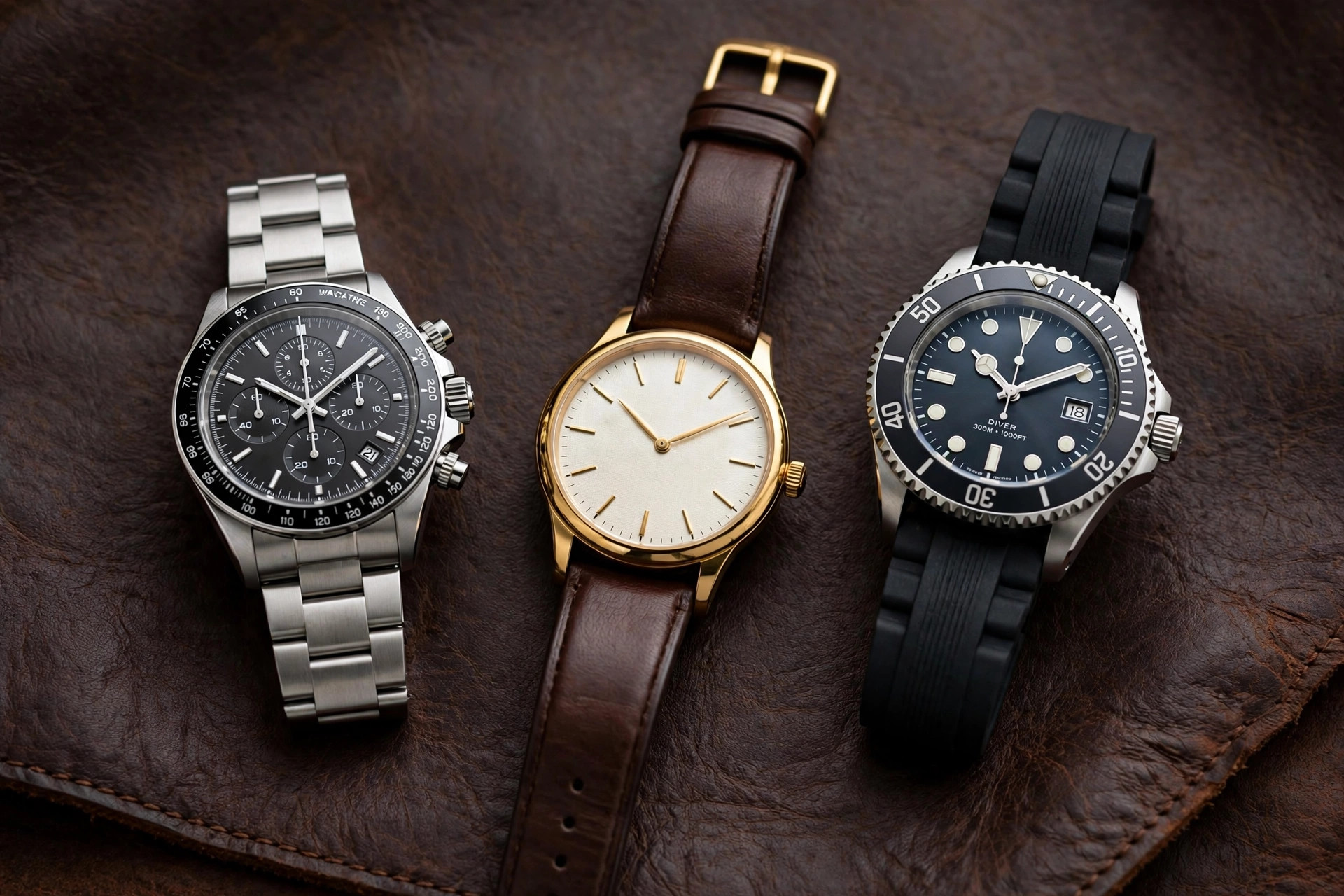
- Dress watches are characterized by their elegant and minimalist design, making them ideal for formal occasions. They often feature a thin case, a simple dial, and a leather strap. Brands like Patek Philippe and Jaeger-LeCoultre are known for their exquisite dress watches.
Sport Watches:
- Sport watches are robust and built for durability. They typically have features like water resistance, chronographs, and strong materials like stainless steel or titanium. Brands like Rolex, Omega, and Tag Heuer are prominent in this category.
Dive Watches:
- Dive watches are designed for underwater use, known for their water resistance and legible dials. They often have a unidirectional bezel to measure elapsed time. Popular dive watch brands include Rolex Submariner, Omega Seamaster, and Breitling Superocean.
Aviator Watches
- Aviator or pilot watches are inspired by aviation and often have large, easily readable dials and features like chronographs. They typically have a rugged design and a variety of complications. Brands like IWC and Breitling excel in this category.
Chronograph Watches:
- Chronograph watches have built-in stopwatch features, allowing wearers to measure elapsed time. They are versatile and come in various styles, making them suitable for both casual and formal wear. Brands like Tag Heuer and Omega offer popular chronograph models.
Smartwatches:
- Smartwatches combine traditional watch design with modern technology, offering features like fitness tracking, notifications, and app integration. Popular brands in this category include Apple, Samsung, and Garmin.
Understanding these categories helps individuals choose the right men's watch based on their style preferences, intended use, and the features they value the most. Whether it's a sleek dress watch for a formal event or a rugged dive watch for outdoor adventures, the market offers an array of options to cater to every taste and lifestyle.
Men's watches have transcended their primary function of timekeeping to become a statement of one's style and status. From the early days of pocket watches to the current era of smartwatches, the horological world continues to innovate and captivate, offering an array of choices that suit every taste and lifestyle.
After you finish learning about watches for men you may also want to learn about clothing and footwear.
You may also want to learn about women's watches.
Brands and Buying Today
The men's market now runs on two tracks at once. Mechanical watches from Swiss, German and Japanese makers sell craftsmanship, longevity and design continuity, with the Submariner and Speedmaster as the pattern of models refined over decades rather than replaced. Digital and smart watches sell function, fitness tracking, notifications and alarms alongside the time, and many men wear one of each kind in the same week. Retail runs from brand boutiques and long-established jewelers to large watch marketplaces, and the guide's linked retailer references reflect that range.
For a first serious men's watch, the durable advice is to buy fit, legibility and a design old enough to have settled: a case size the wrist carries comfortably, a dial readable at a glance, water resistance matched to real life, and a movement, quartz or mechanical, chosen for the upkeep the owner actually wants. Trends in case size and dial color cycle quickly; the watches that stay in collections are the ones that were comfortable and useful from the first week.
Common Questions
What are the main types of men's watches?
By function and dress level: dress watches, slim and simple for formal wear; dive watches, water resistant with rotating bezels; chronographs, with stopwatch subdials; GMT and travel watches tracking a second time zone; field watches, rugged and legible with military roots; pilot watches with large, clear dials; and digital and smart watches. Most men's collections are built from two or three of these types, a dress or everyday watch, a sports watch, and sometimes a chronograph, rather than from many examples of one type.
What case sizes do men's watches come in?
Modern men's watches commonly run from about 36 to 44 millimeters, with everyday and dress models clustering around 38 to 41 and dive and pilot styles running larger for legibility. Vintage men's watches were smaller, often 32 to 36 millimeters, which reads as restrained rather than small on many wrists today. Fit is decided by lug to lug length against the wrist's width as much as by diameter, so measurements of a watch already owned and worn comfortably are the best guide to a new purchase.
Did men really resist wristwatches at first?
Yes. Through the 19th century the wristwatch was marketed as a ladies' bracelet watch, and men of status carried pocket watches, often on a chain. Military need changed the verdict: officers in the Boer War and then the First World War strapped watches to their wrists for coordination and convenience, and returning soldiers kept the habit. Within a generation the pocket watch had become the formal exception and the wristwatch the standard men's timepiece, a complete reversal driven by practicality rather than fashion.
More to Explore
- Chronograph Watches
- Watches of Switzerland
- Tourneau
- Wempe
- Chrono24
- Tiffany & Co.
- Harrods
- WatchBox
- Men's Fashion
- Men's Shoes
- Men's Clothing Guide
- Men's Fashion Brands
- about women's watches
- Watch Guide
- Watch Guide Pg. 2
- Watch Designers
- Jewelry Guide
- Top 10 Watch Brands
- Swiss Watch Guide
- Designer Brand Watches
- Men's Apparel