Tungsten Necklaces
Extreme hardness and heft, with honest limits
Tungsten necklaces are made not from soft pure tungsten but from tungsten carbide, a compound of tungsten and carbon formed by powder metallurgy and sintered into one of the hardest jewelry materials in use, around 9 on the Mohs scale. That hardness delivers outstanding scratch resistance: a polished tungsten pendant keeps its shine through daily wear that would scuff gold, silver and even steel. Tungsten is also one of the densest metals used in jewelry, so necklaces and pendants have a substantial, weighty feel many wearers read as quality. The natural color is a distinctive gunmetal grey, which can be polished to a bright shine, brushed, or colored black and other tones with surface coatings, and designs often combine it with carbon fiber, ceramic or precious-metal inlay. Tungsten is hypoallergenic in its usual jewelry grades and does not tarnish. Popularized first in men's rings in the 2000s, it moved naturally into chains, dog-tag and cross pendants and other contemporary necklace forms.
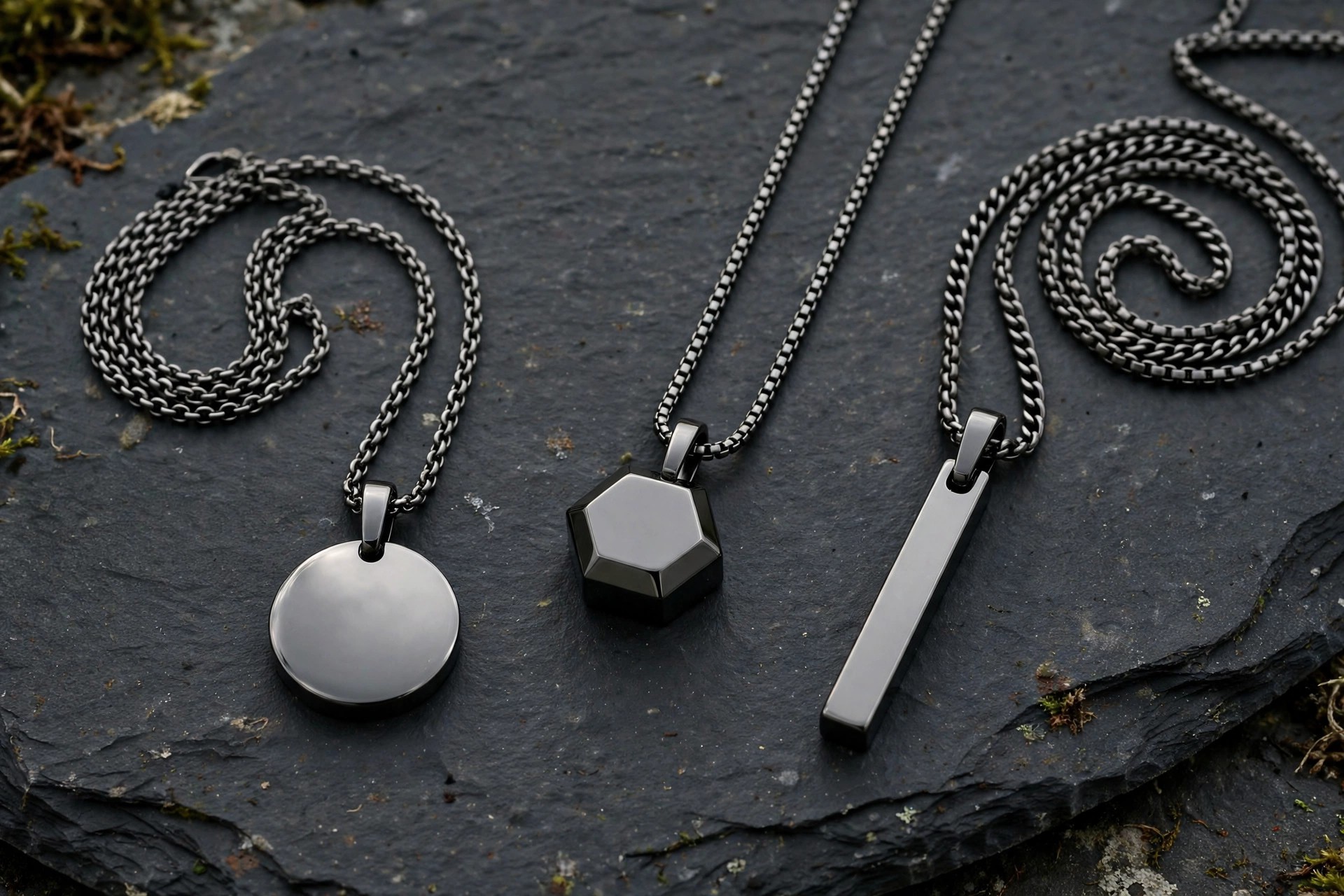
Tungsten Necklaces: A Blend of Strength and Style
Tungsten necklaces are a modern and popular jewelry choice that incorporates tungsten, a dense, robust metal known for its remarkable strength and durability. Tungsten jewelry, including necklaces, has gained significant traction in recent years due to its unique properties and sleek aesthetic.
Properties of Tungsten:
Density and Strength:
Tungsten is one of the densest metals, providing substantial weight and a feeling of quality to jewelry. It's extremely hard and durable, making it resistant to scratching and wear.
Scratch Resistance:
Tungsten is highly scratch-resistant, maintaining its polished appearance longer than most other metals, including gold and silver.
Hypoallergenic:
Tungsten is hypoallergenic and unlikely to cause skin irritation, making it an excellent choice for individuals with sensitive skin or metal allergies.
Luster and Finish:
Tungsten has a distinctive, natural gunmetal grey color that provides an attractive, contemporary look. It can also be polished to a high shine or combined with other metals to create bi-colored or multi-toned designs.
Biocompatibility:
Tungsten is biocompatible, meaning it doesn't react with the human body and is often used in medical devices and implants.
History of Tungsten in Jewelry:
The use of tungsten in jewelry gained popularity in the late 20th
century, particularly in the 2000s, due to its exceptional properties,
including its resistance to scratching and its unique, modern appearance.
Initially, tungsten was employed in men's rings and later expanded to
include necklaces, bracelets, and other jewelry styles, appealing to both
men and women seeking contemporary and durable accessories.
Popular Shopping Locations for Tungsten Necklaces:
Online Retailers: Numerous online platforms and jewelry stores offer a wide variety of tungsten necklaces, allowing customers to browse through different styles, designs, and price ranges.
Jewelry Stores: Local jewelry stores often carry tungsten necklaces in their inventory, providing customers with the opportunity to see and try on the jewelry in person.
Specialty Jewelry Retailers: Specialty jewelry stores that focus on modern, alternative, or men's jewelry often have a curated selection of tungsten necklaces due to its popularity in these niches.
Tungsten Sourcing:
Primary Sources: Tungsten is primarily sourced from minerals such as scheelite and wolframite. The top tungsten-producing countries include China, Russia, Canada, Bolivia, and Austria.
Mining and Processing: Tungsten mining involves extracting the ore from the earth, which is then processed through various techniques to obtain tungsten concentrate. The concentrate is further refined into tungsten oxide and then converted into tungsten metal through a reduction process.
Tungsten necklaces blend the strength and durability of tungsten with modern design, making them an attractive choice for those seeking contemporary and long-lasting jewelry. As consumers continue to value both style and substance in their accessories, tungsten jewelry, including necklaces, is expected to remain in demand.
Learn about tungsten earrings, tungsten rings and tungsten bracelets.
Learn more about metals used for jewelry.
Weight, Grades and Coatings
Expect tungsten to feel noticeably heavier than a titanium or steel piece of the same size, which suits substantial pendants but can tire the neck in very thick chains worn all day; trying the weight, or checking the stated gram weight, prevents surprises. Ask whether a piece is solid tungsten carbide or merely tungsten plated over another metal, since only the solid material delivers the full scratch resistance, and check whether any cobalt binder is used, because nickel-binder carbide is the preferred hypoallergenic jewelry grade.
Care is simple: wash with mild soap and water, dry thoroughly, and store separately so the hard surface does not scratch softer jewelry kept beside it, a point often missed, since tungsten endangers its neighbors more than they endanger it. For chains, confirm that clasps and connector rings, which are rarely carbide themselves, are made from a durable metal such as stainless steel, because those moving parts, not the tungsten, decide how long the necklace lasts.
Common Questions
Will a tungsten necklace scratch in everyday wear?
Tungsten carbide is among the most scratch-resistant jewelry materials available, and ordinary contact with clothing, desks, keys and most metals leaves its polish unmarked. Only materials of equal or greater hardness, notably diamonds, industrial abrasives and some ceramics, can scratch it. That resistance is the main reason buyers choose tungsten, though colored surface coatings on black or plated pieces can wear even while the carbide beneath stays intact.
Can a tungsten necklace or pendant be resized?
No. Tungsten carbide cannot be cut, stretched, soldered or reshaped with jewelry tools, so chains cannot be shortened link by link in the usual way and pendants cannot be altered. Buy the exact length needed, confirm the seller's exchange policy before ordering, and treat the stated dimensions as final. This is a genuine trade-off for the hardness, and reputable sellers state it clearly at the point of sale.
Can tungsten break, if it is so hard?
Yes. Hardness and toughness are different properties: tungsten carbide resists scratching superbly but is brittle, so a sharp impact, a drop onto concrete or tile, or strong crushing force can crack or shatter a piece instead of bending it. A gold or steel pendant would dent under the same blow. Handle tungsten necklaces over hard floors with care, and remove them for heavy manual work and contact sports.