Gold Plated Necklaces
A thin layer of gold, and what it can and cannot do
Gold plated necklaces carry a thin layer of gold bonded over a base metal such as brass, copper or sterling silver, giving the color of gold at a small fraction of solid gold's cost. The category spans ordinary flash plating, which is very thin, through vermeil, a regulated thicker plating over sterling silver, to gold filled, which is a much thicker mechanically bonded layer and a different product altogether. Because a necklace sits against skin, oils and friction wear plating faster at the neck than almost anywhere else. This guide explains the terms and stamps, realistic expectations for wear, how plating differs from vermeil and gold filled, and the habits that make a plated necklace last.
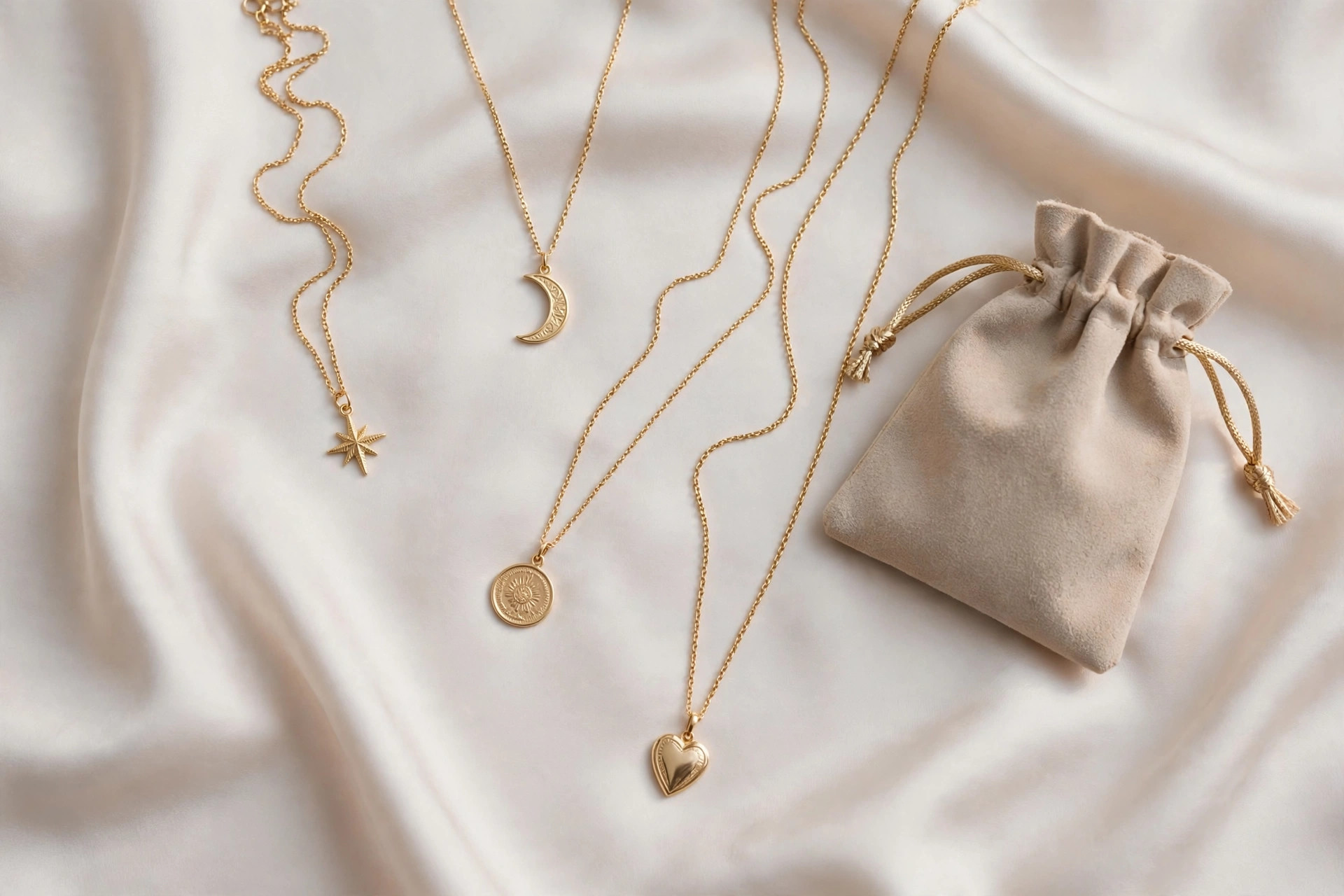
Gold-Plated Necklaces: A Glimpse of Luxury with Practicality
Gold-plated necklaces offer an affordable and aesthetically appealing alternative to solid gold necklaces. In this process, a base metal is coated with a thin layer of gold through electroplating, creating the appearance of a solid gold piece. Understanding the pros and cons of gold-plated versus solid gold necklaces helps individuals make an informed choice based on their preferences and budget.
Pros of Gold-Plated Necklaces:
Affordability:
Gold-plated necklaces are significantly more budget-friendly compared to solid gold. They provide an opportunity to enjoy the look of gold without the hefty price tag.
Versatility:
The base metal in gold-plated necklaces allows for a broader range of design options, making them versatile and adaptable to various styles and trends.
Hypoallergenic:
Gold-plated necklaces can be a suitable option for individuals with sensitive skin since the gold coating acts as a protective barrier against potential skin irritation caused by the base metal.
Aesthetically Pleasing:
The gold plating gives the necklace a lustrous finish, mimicking the appearance of solid gold. It is visually appealing and can be difficult to distinguish from solid gold to the untrained eye.
Cons of Gold-Plated Necklaces:
Durability:
The gold plating on a gold-plated necklace is relatively thin, and over time, it can wear off or tarnish, exposing the base metal beneath. This reduces its longevity compared to solid gold.
Reactivity to Skin:
The base metal may react with skin chemistry, causing some individuals to experience discoloration or skin irritation. The reaction can vary depending on the specific base metal used.
Limited Replating:
While gold-plated necklaces can be replated to restore their appearance, the process is limited. Over multiple replating sessions, the base metal may become more visible.
Solid Gold Necklaces:
Pros of Solid Gold Necklaces:
Durability: Solid gold necklaces are highly durable and can last a lifetime with proper care, as gold is a precious metal that doesn't corrode or tarnish.
Value Retention: Solid gold holds intrinsic value and can retain its value or appreciate over time, making it a potential investment.
Skin-Friendly: Pure gold is hypoallergenic and unlikely to cause skin reactions.
Cons of Solid Gold Necklaces:
Cost: Solid gold necklaces are considerably more expensive due to the high gold content and the value associated with the metal.
Limited Designs: The malleability of gold is limited, restricting the complexity of designs compared to gold-plated necklaces.
Choosing Between Gold-Plated and Solid Gold:
Consideration Factors:
Budget, desired longevity, intended use (daily wear or special
occasions), and preference for long-term investment are important factors to
consider when choosing between gold-plated and solid gold necklaces.
Hybrid Options:
Some prefer a compromise, opting for gold-filled or gold vermeil necklaces which offer a thicker layer of gold compared to gold-plated but are more affordable than solid gold.
In conclusion, gold-plated necklaces offer a balance between affordability and aesthetics, making them a popular choice for those seeking a touch of luxury within a budget. On the other hand, solid gold necklaces are a timeless investment due to their enduring value and longevity. The choice ultimately depends on individual preferences, lifestyle, and financial considerations.
You may want to also learn about gold plated bracelets, gold plated rings and gold plated earrings.
Reading the Terms
Stamps tell the story: GP means gold plated, GEP electroplated, and HGE heavy gold electroplate, all over a base metal the stamp may not name. Gold filled, stamped with a fraction such as 1/20 14K GF, is not plating at all but a thick gold sheet bonded to the core, containing far more gold and wearing for years; it cannot legally be sold as plated, and the distinction is worth real money. Vermeil's definition is regulated in the United States, which is why the word carries more weight than marketing terms like gold dipped or gold toned, which have no standard at all.
Bought with clear eyes, plated necklaces are the right tool for trend pieces, large statement chains and trying a style before committing to solid gold. The failure mode is expecting permanence: budget for the look, enjoy it, keep it dry and clean, and know that a favorite piece can be re-plated. For a necklace meant to be worn daily for years, solid gold or gold filled is the honest recommendation.
Common Questions
How long does gold plating on a necklace last?
It depends on thickness and wear. Thin fashion plating worn daily against skin may show the base metal within months, especially at the clasp and where a pendant slides. Thicker plating and vermeil last longer, and occasional wear with good care extends any plating's life. Plating wear is normal use, not a defect, and jewelers can re-plate a necklace to renew it.
What is the difference between gold plated and gold vermeil?
Vermeil is a specific standard: a base of sterling silver plated with gold of at least 10 karats to a minimum thickness of 2.5 microns, thicker than ordinary plating, over a more valuable base metal. A piece stamped simply as gold plated may have a far thinner layer over brass or another base metal. Vermeil costs more than basic plating and less than solid gold, and wears accordingly.
How should gold plated necklaces be cared for?
Put the necklace on last, after perfume, hairspray and lotion, and take it off before swimming, showering, exercise and sleep. Wipe it with a dry soft cloth after wear and store it separately in a pouch. Never use polishing cloths or dips meant for solid gold or silver, which strip plating; gentle handling is the whole of plated care.