Reflective Fabric Guide
Reflective fabric returns light toward its source, making workers, runners and riders visible after dark. This hub explains how the material works and points you to reflective fabric mills, wholesalers and retail stores.

How Reflective Fabric Works
Reflective fabric reflects light back toward its source over a long distance. Most products on the market achieve that effect in one of two ways. The first uses tiny glass beads embedded in or coated onto a fabric surface. When headlights or another light source strike the beads, each bead acts like a small lens, focusing the light and returning much of it toward its source, so the wearer appears bright to the driver behind the light. The second method uses micro prisms, microscopic angular elements that reflect light with high efficiency and often produce a sharper, brighter return, particularly on flexible films and tapes.
Both constructions are usually applied to a backing cloth so the reflective layer can be cut, sewn or heat-transferred onto garments and accessories. Silver-grey is the classic colour because the reflective elements themselves are essentially colourless, but manufacturers also produce coloured reflective fabrics, printed patterns and stretch versions for sportswear. Performance is measured by how much light is returned at given angles, and buyers who need a certified safety material should always ask for test data for the specific construction rather than relying on appearance, because two fabrics that look similar in daylight can perform very differently at night.
Safety Uses and Design Uses
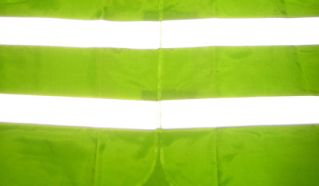
The primary use of reflective fabric is safety. High-visibility vests, jackets, rainwear and workwear for road crews, emergency services, warehouse staff and cyclists rely on reflective bands and panels so the wearer stands out in headlights. The placement matters as much as the material: reflective elements on moving parts of the body, such as arms and legs, help drivers recognise a human shape quickly, which is one reason quality safety garments combine fluorescent background fabric for daytime with reflective trim for darkness. Children's school bags, pet collars, running shoes and umbrellas all use the same principle at a smaller scale.
Reflective material is not only for safety, however. Designers use reflective panels, piping, logos and all-over reflective prints as a design element in streetwear, athletic apparel and accessories, where a garment that looks muted grey by day flashes bright silver in photographs or under street lights at night. That dual character has made reflective fabric a recurring fashion detail as well as a protective one. When specifying it for fashion, check hand feel, flexibility and wash durability, because a stiff reflective film that is fine on a vest may crack or feel uncomfortable on a soft jersey garment.
Choosing and Caring for Reflective Fabric
Start a purchase decision with the end use. A certified high-visibility garment needs reflective tape or fabric that meets the visibility standard your industry requires, applied in the pattern that standard specifies. A fashion or sports product has more freedom, but still needs a material that survives the garment's expected life: ask how the reflective performance holds up after repeated washing, abrasion and flexing, and whether the product is designed for home laundering or industrial laundering. Stretch reflective fabrics suit close-fitting athletic wear, while woven backings behave better in structured jackets, bags and footwear.
Care affects performance. Dirt, oils and damaged surfaces scatter light instead of returning it, so reflective garments should be washed according to the maker's instructions, usually inside out, without harsh treatments that could strip or cloud the reflective layer, and they should be inspected regularly. A reflective band that has cracked, peeled or been abraded down to the backing no longer does its job even if the garment itself still looks serviceable. Storing reflective clothing clean, dry and out of prolonged strong sunlight also helps preserve both the fluorescent background colour and the reflective finish over time.
Finding Reflective Fabric Suppliers
This hub organises the search into three routes. The mills page covers producers of reflective fabric, the wholesalers page covers distributors who sell in quantity to garment makers and converters, and the stores page covers retailers where smaller amounts can be bought for samples, repairs and individual projects. Knowing which route fits your quantity saves time: a home sewer needs a retailer, a workwear manufacturer needs a mill or an authorised distributor, and a designer developing a new product often starts with retail yardage for prototypes before committing to a wholesale source for production.
Whichever route you take, request a sample and test it in realistic conditions, ideally outdoors at night with a vehicle light source, rather than judging brightness under bright shop lighting. Confirm the width, backing fabric, application method, minimum order and whether the material can be sewn, welded or heat-applied with your equipment. If the finished product will be sold as protective equipment, keep the supplier documentation with your product file. Good records, clear specifications and a tested sample are worth far more than a low headline price on an untested reflective material.
Photos
Looking for Fabric Mills and Suppliers?
For the wider fabric directory beyond this reflective section, browse the Apparel Search fabric directory or return to the main Fabric Search hub to explore other fibres and constructions.